Rights & Money · Topic 2 of 27
What's the difference between a publisher and a label?
The publisher takes care of the song, the label takes care of the recording.
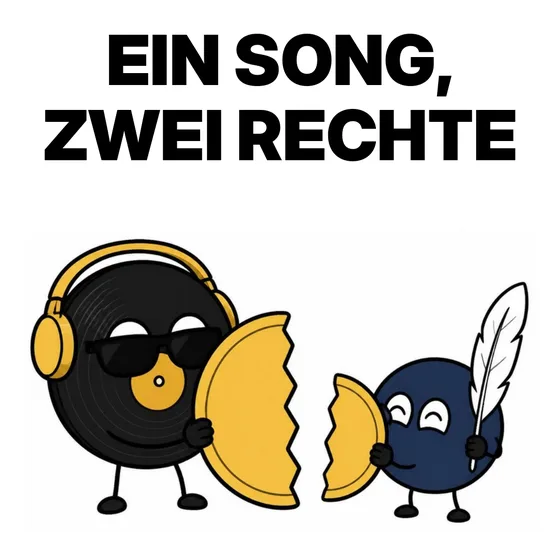
You wrote and recorded a song? Then you own not one right but two. And this is exactly where publishers and labels split.
The composition and the publisher
The composition, meaning melody and lyrics, is protected by copyright. In Germany that always stays with you as the songwriter, until 70 years after your death. You only give a publisher usage rights.
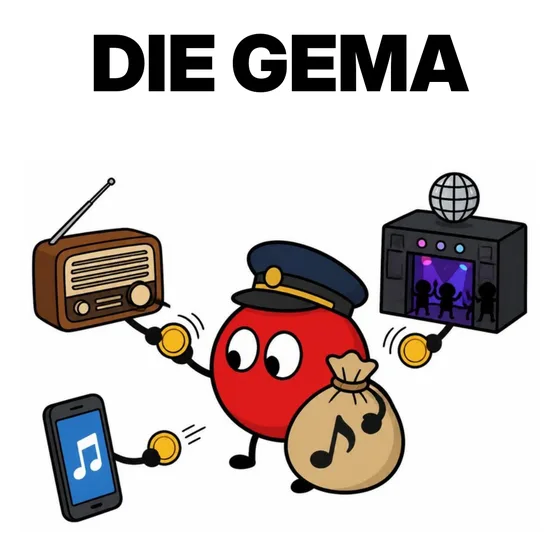
- The publisher registers your songs with GEMA.
- It looks for artists who record new versions of your songs.
- It places your songs in films, ads and games.
- In return it gets a share, for example up to a third of GEMA performance income.
The recording and the label
The recording, the so-called master, is protected by neighbouring rights. They belong to whoever paid for the recording, usually the label, and to the musicians you hear on it. They last 70 years from release.
- The label pays for the studio, production and music video.
- It gets the song onto Spotify, radio and playlists and does the marketing.
- In return it usually owns the master. The artist traditionally gets 15 to 25 percent.
Who earns more?
On a stream, the recording side earns roughly four times as much as publisher and songwriter combined. But if someone covers your song, your label earns nothing and your publisher does. And film and advertising need both. That's why all three major labels also own a publisher.
As an independent artist you can do both yourself: your own publishing (or simply join GEMA) and your own label via a distributor.
All figures are rough guidelines for beginners and focus on Germany. They are no substitute for legal or tax advice.