Rights & Money · Topic 1 of 27
Why does every song contain two rights?
Composition and recording: the most important principle in the whole music business.
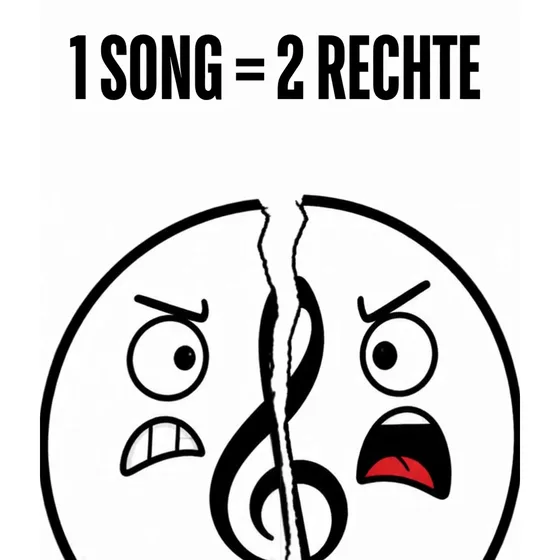
Every song contains two different rights. Once you understand this, almost everything else in the music business falls into place.
1. The composition
This is the song itself: melody and lyrics, the way you could write them down. The composition belongs to the songwriters and their music publisher. It is protected by copyright.
2. The recording
This is the one specific version you hear on Spotify, also called the master. It usually belongs to the label, or to you if you release it yourself. On top of that, the singers and musicians you hear on it have rights too.
Example: you cover a hit. Your recording belongs to you, but the song stays with the original writers. So the original songwriters earn money from every stream of your cover.
Who collects for what?
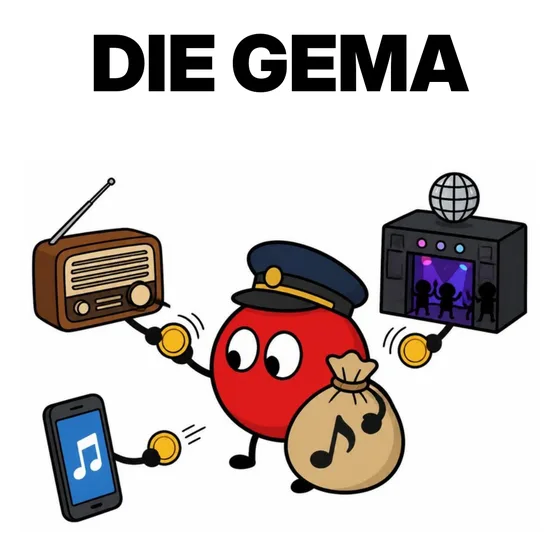
- For the composition, GEMA (Germany's collecting society for songwriters) collects and pays songwriters and publishers.
- For the recording there is GVL. It pays labels, singers and musicians, for example when your recording is played on radio, TV or in public.
- Film or advertising usually needs permission for both rights.
Do you write and sing your own songs? Then register with both GEMA and GVL, or you are leaving money on the table.
All figures are rough guidelines for beginners and focus on Germany. They are no substitute for legal or tax advice.