Labels & Contracts · Topic 8 of 27
How does a label make money?
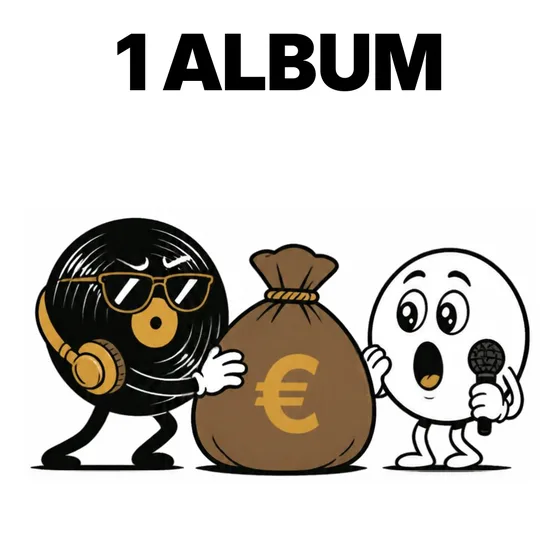
A label offers you 50,000 euros. Why? Because it's placing a bet.
A label offers you 50,000 euros, just like that. The money is called an advance. And the key point: if the song flops, you don't have to pay it back.
The investment
On top of that the label pays for studio, music video and marketing, let's say another 50,000 euros. So the label has invested 100,000 euros before a single euro comes back.
Recoupment
Then the song comes out and earns money. The label keeps most of it, and you get, say, 20 percent. But those 20 percent aren't paid out. They first pay off your advance. That's called recoupment. Until your share reaches 50,000, nothing new reaches you.
Let's do the maths: for 20 percent to make 50,000 euros, the song has to earn 250,000 euros. That's roughly 80 million streams. The label needs around 125,000 euros in income just to get its 100,000 back. Only then does it make a profit.
Many bets, one hit
Most songs never get that far. If a song flops, the label loses its 100,000 euros and you keep your advance. So one hit has to pay for the losses of many flops. A label works like an investor.
To balance the risk, the label usually owns the recording, often for decades. You trade rights and shares for money and security. The label trades money for a chance.
All figures are rough guidelines for beginners and focus on Germany. They are no substitute for legal or tax advice.